
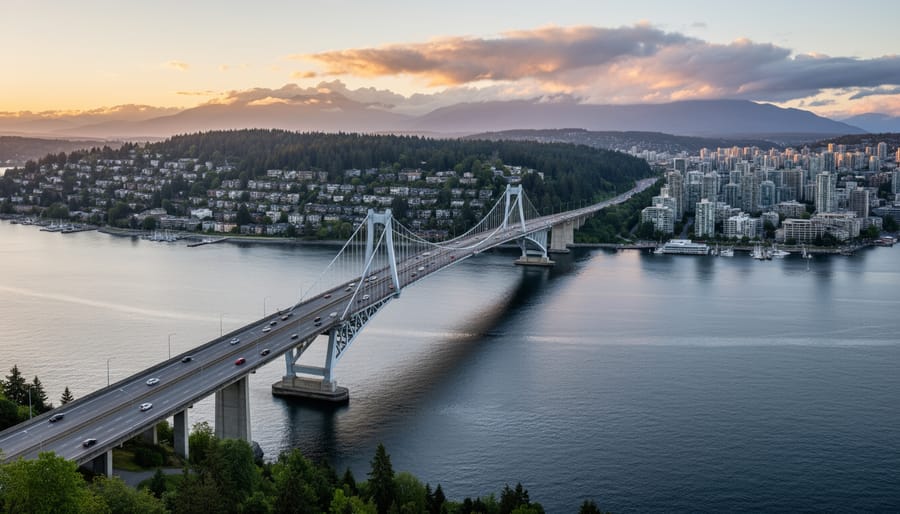
North Vancouver is not Vancouver. That might sound obvious, but it’s the single most important thing to understand about the cluster of communities that sit across the Burrard Inlet from the city proper. Separated by water and connected by two bridges and a SeaBus, North Vancouver exists as its own distinct entity: two separate municipalities, actually, with the District of North Vancouver wrapping around the smaller City of North Vancouver like a horseshoe. Together, they form a region of roughly 160,000 people who live with mountain views most Vancouverites can only dream about, because here’s the thing: North Van doesn’t just look at the mountains. It lives on them.
The confusion in the search term “n vancouver bc” reflects a real geographic quirk. When people outside the region think of Vancouver, they’re usually picturing downtown’s glass towers and Stanley Park. North Vancouver sits directly across the water, visible from every north-facing condo window in the city, yet it operates under completely different municipal governments, different police forces, and a subtly different culture. The North Shore, as locals call it (lumping in West Vancouver for good measure), has cultivated its own identity: outdoorsy, family-oriented, and just affluent enough to make Vancouverites raise an eyebrow.
What makes North Vancouver worth understanding goes beyond administrative boundaries. This is where the city meets wilderness in the most literal sense, where you can commute to downtown Vancouver in 20 minutes but access world-class hiking, mountain biking, and skiing in even less time. The region’s steep geography has shaped everything from its housing patterns to its social dynamics, creating communities that feel simultaneously connected to and separated from the metropolitan core.
Two North Vancouvers, One Stubborn Identity
Here’s a fun fact that confuses nearly everyone who moves to Vancouver: there isn’t just one North Vancouver. There are two, the City of North Vancouver and the District of North Vancouver and locals will correct you if you get them wrong.
The City of North Vancouver is the compact, urban core hugging the waterfront between Lonsdale and the harbour. It’s where you’ll find Lonsdale Quay, the shipyards, and the densest concentration of high-rises and restaurants. The District sprawls across everything else: from Lynn Valley to Deep Cove, encompassing vast stretches of mountainside, suburban neighborhoods, and the majority of North Shore parkland.
This isn’t some bureaucratic quirk. The division shapes everything from property taxes to snow removal, transit planning to community identity. City residents pay higher taxes for urban services and walkability. District residents get lower density, more green space, and a sprawl that demands a car. Each municipality jealously guards its autonomy, and periodic talk of amalgamation gets shot down faster than you can say “Seymour Parkway.”
The result is a stubborn dual identity that outsiders find baffling and insiders find essential. Ask someone where they’re from, and they won’t just say “North Van”, they’ll specify City or District, because it matters. The City leans urban and progressive; the District skews suburban and family-focused. Neither wants to be absorbed by the other, and certainly not by Vancouver proper across the water. This isn’t media bias or outside perception shaping the narrative, it’s a homegrown independence that runs deep in the North Shore psyche.
The Great Divide: Why North Van Won’t Just Become ‘Vancouver’
The Bridge Toll Mentality
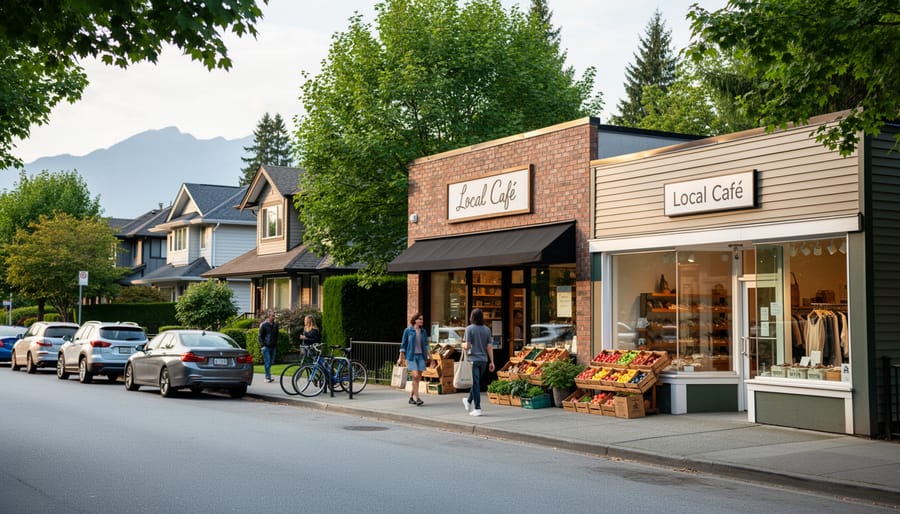
The bridges connecting North Vancouver to the rest of Metro Vancouver aren’t just infrastructure. They’re psychological borders, daily reminders that crossing into the city proper requires deliberate effort. Even though the last bridge toll disappeared in 2024, the toll booth mentality persists in how North Shore residents think about their relationship with Vancouver.
That physical barrier of Burrard Inlet created something more durable than traffic congestion: a genuine sense of separation. North Van residents don’t casually pop into downtown Vancouver the way Kitsilano or Mount Pleasant folks do. Every trip involves planning around bridge traffic, calculating whether it’s worth the commute, and accepting that spontaneous meetups with Vancouver friends come with friction.
This geographic reality bred a peculiar pride. North Shore residents built their own social infrastructure, their own restaurant scenes, their own everything. Why battle bridge traffic when Lonsdale has what you need? That self-sufficiency evolved into cultural identity. North Van became the place for people who didn’t want to be in Vancouver, who valued proximity to mountains over urban density.
The bridges also provided convenient scapegoats. Bad transit? Blame the bridges. Limited nightlife? The bridges. Housing costs? Well, those affect everyone, but North Van residents could at least tell themselves they were trading bridge commutes for mountain access and community character that Vancouver proper was losing to development.
Municipal Politics and Local Control
North Vancouver’s governance structure isn’t just administrative red tape, it’s a deliberate shield against the kind of development pressures that have transformed Vancouver proper. Both the City and District councils operate with a fierce protectiveness over zoning decisions, neighbourhood character, and development pace that simply wouldn’t survive in a larger amalgamated municipality.
The DNV in particular has built its political identity around slow-growth principles. Council meetings regularly feature passionate debates about tree preservation bylaws, setback requirements, and view corridors, issues that might get steamrolled in a bigger city’s agenda. This hyper-local focus means residents can actually influence what gets built three blocks from their house, a level of democratic engagement that feels quaint compared to Vancouver’s more distant city hall.
The City of North Vancouver takes a slightly different approach, embracing denser development along the waterfront while maintaining strict controls in residential areas. But even here, the scale remains manageable. Residents know their councillors personally, show up to public hearings, and expect accountability.
This system costs more to operate and creates some redundancy, but it delivers something North Shore residents value more than efficiency: the power to say no. When a developer proposes a tower that doesn’t fit, when a regional plan conflicts with local vision, North Van councils have the autonomy to push back. That’s not bureaucracy, that’s democracy at a human scale.
What Makes North Van… North Van
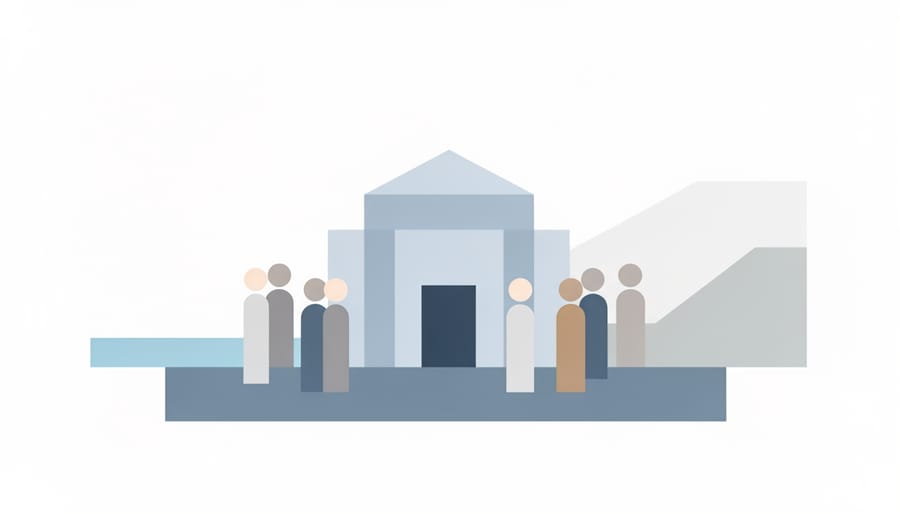
Walk into any North Vancouver coffee shop on a Saturday morning and you’ll spot the tell-tale signs: muddy hiking boots lined up at the door, fleece jackets draped over chairs, trail maps spread across tables alongside laptops. This isn’t recreational tourism. This is daily life. The North Shore doesn’t just have mountain access; it has a population that treats alpine trails the way other neighborhoods treat corner stores.
The outdoor culture here goes beyond weekend warriors. North Van residents will reschedule meetings around powder days, measure housing value by proximity to trailheads, and genuinely debate whether the Baden-Powell Trail or the Grouse Grind offers better training. Dog ownership per capita runs high because everyone needs a hiking partner. Real estate listings highlight “direct access to trails” as a primary selling point, sometimes ahead of square footage. This isn’t lifestyle branding. It’s economic and social infrastructure.
The family orientation runs deeper than playground density. North Vancouver’s population skews toward households with kids who stay put rather than bouncing between rental units. Playgrounds get used hard, elementary schools command fierce loyalty, and neighbors actually know each other’s children. Multi-generational families cluster here, drawn by the combination of space, schools, and that increasingly rare commodity in Metro Vancouver: yards with actual grass. The community colleges and educational institutions reflect these family values, emphasizing practical skills alongside academic achievement.
Environmental consciousness translates into action rather than virtue signaling. North Van implemented aggressive green building standards before they became fashionable elsewhere. Residents push back hard against developments threatening tree canopy or green space. Composting and recycling compliance exceeds regional averages not because of enforcement but because people care about the watershed they live in. When council debates environmental measures, turnout spikes.
The social fabric carries a small-town texture despite the population size. Shop owners remember regular customers. Community events draw crowds that actually live in the neighborhood rather than Instagram tourists. Volunteer rates for trail maintenance, creek restoration, and community programs run notably higher than Metro Vancouver averages. People commit to place here in ways that transient urban cores can’t replicate.
This creates a distinct personality: outdoorsy without being precious, environmentally serious without being preachy, community-minded without being insular. North Van residents genuinely believe their side of the water offers something Vancouver proper can’t match. The lifestyle differences aren’t subtle marketing angles. They’re measurable, lived realities that shape everything from municipal priorities to property values to how people spend their Sundays.

The Trade-Offs: What Independence Costs (and Earns)
Living on the North Shore means accepting a bundle of contradictions. Residents pay a premium for independence that delivers real benefits while creating genuine headaches, and most wouldn’t have it any other way.
Start with the transit reality. Getting into downtown Vancouver requires crossing one of two bridges during rush hour, a daily ritual that tests patience and commitment. The SeaBus offers relief, but North Vancouver’s sprawling geography means many residents face a bus ride before the ferry ride before another transit connection. Service duplication across three municipalities (the City, the District, and West Vancouver) means inefficiencies that amalgamation advocates love pointing out. Three fire departments, three planning departments, three sets of municipal staff handling similar tasks for a combined population smaller than Surrey.
Infrastructure costs hit harder when you’re spreading them across smaller tax bases. North Vancouver’s mountainous terrain makes everything more expensive. Water mains climbing steep grades, roads requiring constant maintenance from freeze-thaw cycles, emergency services covering vast areas with limited access points. The District stretches from the waterfront to the backcountry, a geographic reality that makes service delivery genuinely complex.
Pros
- Responsive local government that residents can actually influence through direct engagement.
- Protected green spaces and development controls that have preserved North Shore character.
- Strong sense of community identity and shared values among residents.
- Flexible governance allowing each municipality to reflect its specific needs and priorities.
Cons
- Transit limitations and bridge dependency create daily commuting challenges.
- Service duplication across three North Shore municipalities increases overhead costs.
- Smaller tax bases mean higher per-capita infrastructure expenses, especially given mountainous terrain.
- Limited regional coordination on housing, planning, and major projects.
Yet the benefits justify the hassles for most North Shore residents. Local government here remains genuinely accessible. Residents regularly pack council meetings, influence decisions, and hold officials accountable in ways that feel impossible in larger municipalities. Development battles get fought at human scale, where concerned neighbors can still shape outcomes rather than watching from the sidelines as towers rise.
Environmental preservation represents the independence dividend that residents value most. North Vancouver’s green space protection, watershed management, and density controls reflect local priorities that might get steamrolled in a larger entity focused on regional housing targets. The forests, trails, and mountain access that define North Shore life exist partly because smaller municipalities could prioritize them.
The calculation comes down to values. Residents accept higher costs and service gaps because independence delivers something worth paying for: genuine local control over the landscape and lifestyle that drew them here in the first place.
Community Voices: What North Van Residents Actually Think
Talk to anyone who’s lived on the North Shore for more than a decade, and you’ll hear the same fierce pride wrapped in practical grievances. Sarah Chen, who moved to Lynn Valley in 2009, puts it bluntly: “I’ve sat through hours of municipal meetings where Vancouver councillors debate bike lanes for months. Here, I can actually talk to my mayor at the farmers market. That’s worth something.”
The newcomer perspective differs sharply. Tech workers who’ve relocated to Lower Lonsdale in the past five years often express frustration with what they see as unnecessary complexity. “I didn’t realize I was moving to a different city,” admits Jordan Martinez, who arrived in 2023. “The transit integration is a mess, and explaining to visiting friends that there are two North Vancouvers gets old fast.”
Business owners occupy complicated territory. Raj Sandhu, who runs a cafe on Lonsdale Quay, appreciates the responsive local government but feels the structural separation creates practical barriers. “We’re marketed as part of Metro Vancouver, but operationally we’re on an island. The SeaBus stops running, and we might as well be in Squamish.”
Community activists defending green space and neighborhood character see the current structure as essential protection. “The moment we amalgamate, we become just another neighborhood where Vancouver’s development pressures take precedence over what we’ve built here,” argues longtime resident David Thompson, active in several DNV residents’ associations.
The split even runs generationally. Younger residents under 35 tend to see municipal boundaries as outdated administrative artifacts, while those over 50 view them as hard-won safeguards against homogenization. Both groups love where they live. They just disagree on whether the governmental structure protecting that lifestyle remains the right tool for 2026, or whether it’s become the problem itself.
North Vancouver’s determined independence isn’t stubbornness for its own sake. It’s a deliberate choice that reflects something larger about how communities maintain identity in Metro Vancouver’s increasingly interconnected landscape. The North Shore’s refusal to simply become “Vancouver” demonstrates that geography, governance, and culture matter in ways that administrative efficiency arguments can’t override.
This independence comes with real costs: duplicated services, transit challenges, infrastructure gaps that a unified approach might solve more easily. Yet residents consistently choose these trade-offs over absorption into their larger neighbor. That choice says something important about what people value when they pick where to live and how they want their community run.
Just as breaking news coverage shifts with local priorities and perspectives like Ad Fontes tracks, North Vancouver’s story reveals how neighborhoods define themselves against broader regional narratives. While 2026 headlines push Metro Vancouver toward greater integration, the North Shore stands as evidence that local identity can’t be engineered away by planners or politicians.
North Vancouver remains North Vancouver because people who live there want it that way. In an era demanding regional solutions to regional problems, that’s both a complication and a testament to democracy working exactly as intended.