

Vancouver’s community colleges are practical, accessible gateways into skilled trades, tech careers, healthcare, and university transfer programs, offering thousands of local students flexible pathways that cost a fraction of traditional four-year degrees. If you’re weighing whether VCC, Langara, or one of the region’s other public colleges fits your goals, the short answer is they likely do, especially if you value hands-on training, evening and weekend options, and instructors drawn from working professionals rather than ivory towers.
But here’s what Vancouver needs to understand about these institutions in 2026: they’re not just educational pit stops. They’re economic engines quietly shaping the city’s workforce, social mobility, and cultural fabric in ways universities rarely touch. Walk through the halls of Vancouver Community College or Langara College and you’ll find newcomers polishing their English, mid-career professionals pivoting into cybersecurity, and eighteen-year-olds discovering that welding or dental hygiene can pay better than a psychology degree with half the debt.
Yet despite their outsized impact, community colleges rarely grab headlines or inspire the same civic pride as our research hospitals or tech clusters. This piece unpacks what these schools actually offer, who thrives in them, and why their role in Vancouver’s social and economic landscape deserves more attention than a guidance counsellor’s footnote. Whether you’re plotting your next career move or just curious how this city trains its workforce, understanding community colleges means understanding how opportunity gets built from the ground up.
The Vancouver Community College Ecosystem: More Than Just Classrooms
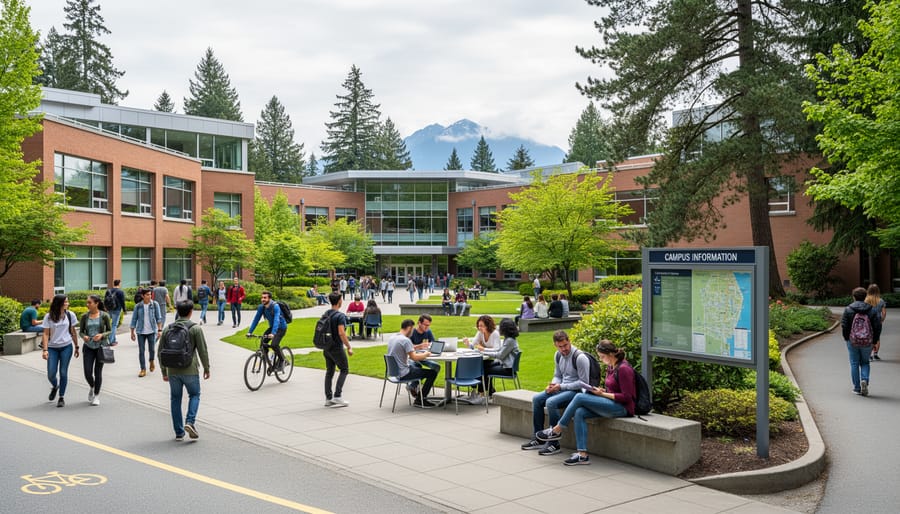
Walk into Vancouver Community College’s Broadway campus on a Tuesday afternoon and you’ll find international students huddled over laptops in the library, tradespeople in Carhartt jackets heading to welding labs, and a group practicing conversational English over coffee in the atrium. This isn’t your typical ivory tower. It’s a microcosm of Vancouver itself, pragmatic, diverse, and bustling with people building their futures one certificate at a time.
Vancouver’s community college ecosystem extends far beyond the VCC name that most locals know. These institutions form a network of opportunity across the city, each serving distinct needs while sharing a common mission: accessible education that actually translates to employment. Unlike universities focused on theory and research, community colleges exist at the intersection of learning and doing, turning out graduates who can wire a building, code an app, or manage a restaurant kitchen the day after convocation.
The landscape includes several key players, each carved out its own niche:
- Vancouver Community College (VCC)The flagship institution offering trades, healthcare, hospitality, and ESL programs across downtown and Broadway campuses
- Langara CollegeKnown for university transfer programs, career training, and strong connections to UBC and SFU pathways
- Douglas CollegeServing New Westminster and Coquitlam but drawing many Vancouver students for nursing, business, and performing arts
- BCITThe province’s polytechnic powerhouse specializing in technology, engineering, and applied sciences with a Burnaby campus that pulls students citywide
What sets these colleges apart isn’t just what happens in classrooms. They function as workforce development engines, training people for jobs that Vancouver’s economy desperately needs, from healthcare workers for an aging population to tech specialists for our growing innovation sector. When a film production needs skilled crew or a restaurant requires trained chefs, community college grads fill those roles.
These campuses also serve as genuine community hubs. VCC’s downtown location hosts public workshops, cultural events, and community meetings. Their hair salons and restaurants, staffed by students, provide affordable services to neighborhoods while offering hands-on training. It’s education that gives back immediately.
Perhaps most critically, community colleges reflect Vancouver’s demographic reality better than any university campus. Walk through and you’ll hear Mandarin, Punjabi, Tagalog, and French mixing with English. You’ll see single parents returning to school, recent immigrants upgrading credentials, and teenagers who couldn’t stomach another semester of lecture halls. This diversity isn’t decorative, it’s the entire point.
From Newcomers to New Careers: How Community Colleges Welcome Vancouver

Walk into any Vancouver community college classroom and you’ll hear the city’s true voice, a chorus of accents and languages that reflects our status as one of North America’s most diverse metropolitan areas. These institutions have become the city’s unofficial welcome centers, where newcomers transform from strangers in a new land into skilled professionals ready to contribute to Vancouver’s economy.
English as a Second Language programs form the foundation of this integration ecosystem. Vancouver Community College and Langara College run some of the most comprehensive ESL offerings in the country, with classes specifically designed for academic preparation, workplace communication, or simply navigating daily life in Vancouver. The genius lies in their multi-level approach, students aren’t just memorizing grammar rules but learning how to order coffee at a local café, read rental agreements, and understand the cultural nuances that make Vancouver tick. These programs recognize that language acquisition isn’t just about passing tests; it’s about building the confidence to participate fully in your adopted city.
The credential recognition pathways represent perhaps the most critical service these colleges provide. A doctor from Syria, an engineer from India, or a teacher from the Philippines often arrives in Vancouver with impressive qualifications that Canadian employers won’t recognize. Community colleges bridge this gap through internationally-educated professional programs that combine credential assessment, bridging courses, and practical Canadian work experience. Vancouver Community College’s Health Care Assistant program has become a lifeline for internationally-trained nurses, allowing them to enter the healthcare field while working toward full credential recognition. These pathways acknowledge a harsh reality, you might need to step sideways before you can step up, but they provide that crucial first foothold.
What sets Vancouver’s approach apart is the ecosystem of wraparound services. Settlement support workers, career counselors who understand immigration challenges, and partnerships with organizations like MOSAIC and ISSofBC create networks that extend far beyond the classroom. Students learn where to find affordable housing, how Canadian workplace culture differs from what they knew back home, and which industries are actively hiring newcomers.
The economic impact ripples through entire families. When a parent gains marketable Canadian credentials, household income stabilizes, children see education modeled as transformative, and communities gain skilled workers who understand both their heritage culture and Vancouver’s professional expectations. These aren’t just schools, they’re integration engines that help newcomers write their Vancouver success stories.
The Affordability Equation: Community College vs. University in Vancouver’s Expensive Reality
Let’s be blunt: trying to afford education in Vancouver feels like playing the world’s most expensive board game where the dice are loaded against you. Rent eats half your paycheck, groceries cost what they used to charge for a nice dinner out, and somehow a coffee now runs you seven bucks. So when it comes to choosing between community college and university, the money conversation isn’t just important, it’s the conversation that determines whether post-secondary education happens at all for most Vancouverites.
The raw numbers tell a story that university marketing brochures conveniently gloss over. Community college tuition in Vancouver typically runs between $3,000 and $6,000 per year for domestic students, while university programs clock in at $5,500 to $8,000 annually just for arts and science degrees, and that’s before we talk about engineering, business, or other premium faculties that can push past $10,000. But tuition is only where the pain begins.
| Pathway | Annual Tuition | Typical Program Length | Total Investment (tuition only) |
|---|---|---|---|
| Community College Diploma | $3,000, $6,000 | 2 years | $6,000, $12,000 |
| University Degree | $5,500, $10,000+ | 4 years | $22,000, $40,000+ |
| College-to-University Transfer | $3,000, $7,500 | 4 years total | $16,000, $30,000 |
The hidden advantage community colleges offer comes from time. A two-year diploma gets you into the workforce two years earlier than a four-year degree, which means two years of earning instead of borrowing. In Vancouver’s job market, where a skilled trades certificate or tech diploma can land you a $50,000 starting salary, that’s potentially $100,000 in earnings and avoided debt combined, a six-figure swing that fundamentally alters your financial trajectory in this city.
Living costs hit differently too. Many community college students can live at home while studying because campuses are distributed throughout Metro Vancouver, rather than clustered around UBC’s peninsula or SFU’s mountain. That saves the $1,200 to $1,800 monthly rent that university students hemorrhage, plus the transit costs of commuting to distant campuses. For families already stretched thin by Vancouver’s cost of living, this geography makes education feasible rather than theoretical.
The choice isn’t purely financial, of course. But in a city where the median home price hovers around $1.2 million and starter apartments cost what houses used to, the affordability equation forces thousands of capable students toward community college not by preference but by math. The question Vancouver needs to ask itself is whether that’s a compromise or actually the smarter play.
Where Trades Meet Tech: The Programs Actually Getting Vancouverites Hired
Walk into any Vancouver community college and you’ll find students welding steel frames in the morning, coding Python by afternoon, and maybe mixing cocktails for hospitality class by evening. These aren’t scattered outliers, they’re tomorrow’s workforce learning the exact skills our city’s economy is screaming for right now.
The film and television production programs at Vancouver’s community colleges feed directly into our massive entertainment industry. We’re Hollywood North, after all, and productions need skilled grips, lighting technicians, set designers, and post-production specialists. These aren’t glamorous acting programs; they’re hands-on technical training that puts graduates on actual film sets within months. The pay starts decent and climbs fast for those who prove reliable.
Culinary programs remain packed because Vancouver’s restaurant scene never stops expanding despite our notorious attrition rates. Students learn everything from classical French technique to indigenous Pacific Northwest ingredients, often training in actual commercial kitchens that serve the public. The smart ones use these programs as springboards into food entrepreneurship, catering, or private chef work, not just line cooking at another overpriced fusion spot.
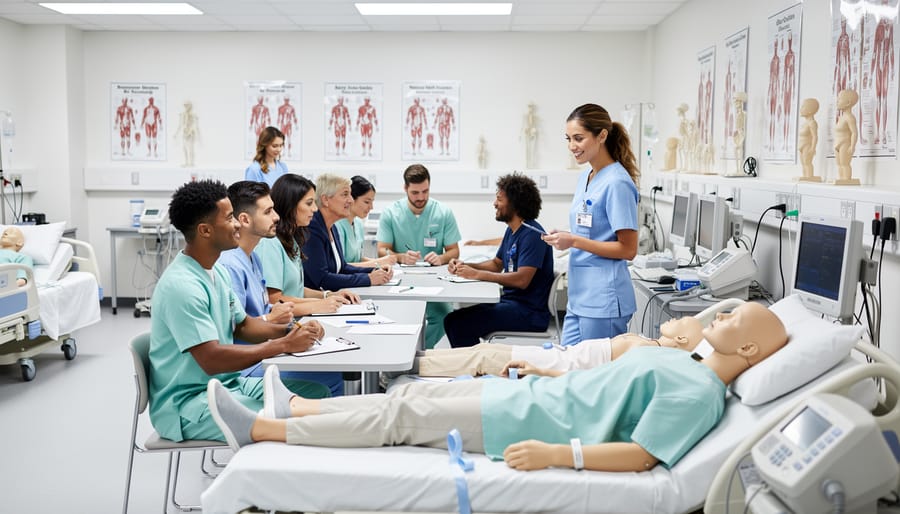
Healthcare programs represent the surest bet for stable employment. Practical nursing, dental hygiene, medical laboratory technology, these fields guarantee work in a city with aging demographics and chronic healthcare staffing shortages. The training is rigorous and the clinical placements demanding, but graduates leave with skills that translate into actual jobs with benefits, not just gig-economy hustle.
Green technology and building trades programs have exploded as Vancouver chases its climate targets and retrofit ambitions. HVAC technicians who understand heat pump systems, electricians trained in solar installation, building envelope specialists, these graduates can basically name their price right now. The construction industry’s aging workforce means young people entering skilled trades face less competition than their peers graduating with generic business degrees.
Tech bootcamps and certificate programs offer compressed training in web development, cybersecurity, and data analysis. They’re not replacing computer science degrees, but they’re getting people employable faster. A three-month intensive followed by a junior developer position beats four years of theoretical study for some learners, especially those switching careers or supporting families.
The through-line across all these programs? They’re specific, practical, and connected to actual Vancouver employers who show up to career fairs with job offers, not vague networking opportunities. These colleges aren’t selling dreams, they’re selling skills our city actually needs.
The Transfer Pathway Nobody Talks About Enough
Starting at a Vancouver community college and transferring to university isn’t a backup plan, it’s often the smarter play, especially in a city where a one-bedroom apartment can cost what some people pay for a year of tuition elsewhere.
BC’s transfer system is surprisingly robust. The BC Council on Admission and Transfer maintains agreements between institutions, meaning credits earned at Vancouver Community College or Langara College transfer directly to UBC, SFU, and most other universities in the province. Complete two years of a business program at VCC, transfer to UBC Sauder, and you’ll graduate with the same degree as someone who started there, but you’ve potentially saved $15,000 or more in tuition and housing costs alone.
The success rates tell the story the universities don’t advertise. Transfer students often outperform their direct-entry peers. They arrive with clearer goals, better study habits, and less of the shell-shocked confusion that comes with navigating a campus of 60,000 students straight out of high school. Community college classes average 25 to 35 students. You can actually ask questions without a microphone.
This pathway also buys time. Not sure if engineering is really your thing? Test the waters with first-year math and physics at Langara before committing to UBC’s competitive program. Changed your mind about nursing? You haven’t sunk four semesters of premium tuition into that discovery.
The catch is planning. Not every course transfers to every program, and some universities have GPA requirements for transfer applicants. Check the BC Transfer Guide obsessively, talk to academic advisors at both institutions, and map your two-year route before registering for a single class.
For Vancouver students facing sticker shock and existential uncertainty in equal measure, starting at community college isn’t settling. It’s strategic.
Community Colleges as Neighborhood Anchors
Walk into Vancouver Community College’s downtown campus on any given Tuesday evening and you’ll find retirees learning watercolour painting next to new Canadians practicing conversational English, while a startup pitch workshop wraps up in the adjacent room. This isn’t accidental programming, it’s what happens when educational institutions root themselves firmly in the neighborhoods they serve.
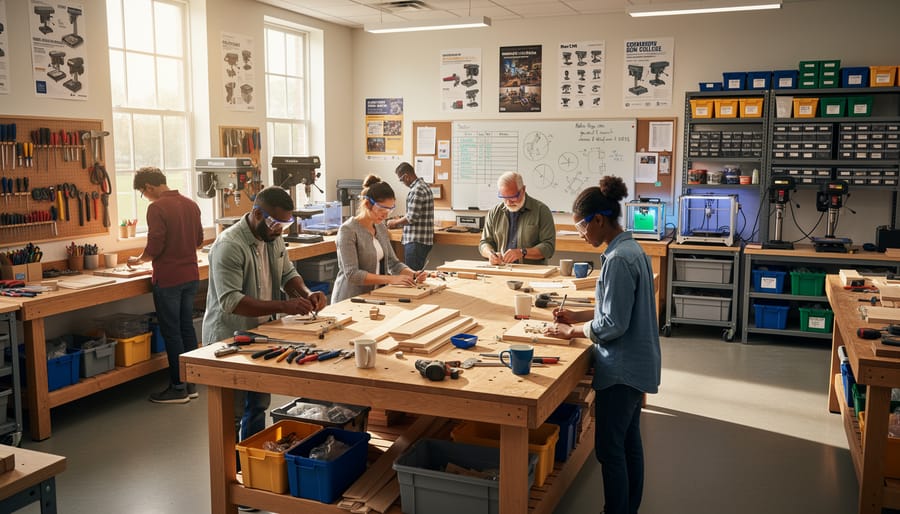
Unlike universities that often operate as self-contained cities, Vancouver’s community colleges function as genuine public squares. VCC’s Broadway campus hosts free tax clinics every spring staffed by accounting students, turning practical training into community service. Langara’s weekend maker spaces welcome anyone interested in woodworking or electronics, no enrollment required. These aren’t just nice extras, they’re how these institutions justify the “community” part of their name.
The economic ripple effects run deeper than you’d think. When Douglas College opened its Coquitlam campus, local businesses reported increased foot traffic and longer operating hours. Coffee shops stayed open later, new restaurants opened nearby, and previously dead evenings saw actual street life. The college brought density and activity to a neighbourhood that desperately needed both.
Community colleges also fill gaps that other institutions ignore. Need a space for your tenants’ association meeting? VCC will likely have a room. Looking for affordable childcare while you retrain? Several campuses run early childhood education programs that serve both students and the broader community. These practical services matter enormously in a city where civic infrastructure barely keeps pace with population growth.
The relationship works both ways. Local businesses provide co-op placements and guest lectures, residents serve on advisory committees, and neighbourhood needs directly shape program offerings. When East Vancouver saw a boom in craft brewing, Kwantlen responded with fermentation science courses. That’s responsive education that actually reflects the city it serves.
The Challenges Worth Acknowledging
Vancouver’s community colleges deserve praise, but let’s not pretend they’re operating without serious friction points. Waitlists for popular programs routinely stretch six to twelve months, effectively locking out students who need immediate training for career pivots or simply can’t afford to wait. Nursing, dental hygiene, and many trades programs fill up within hours of registration opening, leaving hundreds on standby lists that may never move.
Funding constraints hit students in ways that aren’t always visible upfront. While tuition remains lower than universities, many programs require expensive tools, software licenses, or clinical placements that aren’t covered. Student support services, from mental health counselling to career advising, are stretched dangerously thin. You might wait three weeks for a 20-minute advising appointment during peak registration periods.
The perception problem persists too, despite shifting attitudes. Some employers and parents still view community college credentials as second-tier, which affects everything from hiring decisions to family support for students choosing this path. This stigma is slowly eroding as skills gaps widen and practical training gains respect, but it hasn’t disappeared. That perception gap matters when you’re explaining your educational choices at family dinners or job interviews.
International student recruitment has created unexpected pressures. Colleges increasingly rely on international tuition revenue to balance budgets, which can mean domestic students compete harder for seats in certain programs. This isn’t the fault of international students, who contribute enormously to our city’s diversity and economy. It’s a structural funding issue where institutions depend on higher international fees to subsidize operations.
The broader context matters here. These challenges aren’t unique to Vancouver’s community colleges. Provincial policy changes around post-secondary funding affect all institutions, and what to watch includes how government priorities shift resources between sectors. Understanding these systemic pressures requires looking beyond individual institutions to how we collectively value accessible education. Some might approach this analysis with the scrutiny of a media bias chart or frameworks like Ad Fontes examining whose perspectives get prioritized in education debates.
None of this negates the value these colleges provide. It just means prospective students need realistic expectations and contingency plans.
Walking through Vancouver in 2026, it’s easy to focus on the flashy tech campuses and prestigious university towers that dominate our skyline conversations. But the real engine of social mobility and community resilience in this city? It’s humming away in the community college classrooms scattered across our neighborhoods.
These institutions aren’t just filling gaps in our educational system. They’re actively reshaping who gets access to opportunity in one of the world’s most expensive cities. Every newcomer who learns English at Langara, every career-switcher who retrains at VCC, every kid from East Van who takes the transfer pathway to UBC instead of accumulating crushing debt, these are the stories that define Vancouver’s character more than any condo development or tech IPO.
The community colleges we’ve explored aren’t perfect. They’re underfunded, oversubscribed, and often undervalued in conversations about Vancouver’s future. But they’re also doing the unglamorous, essential work of keeping this city accessible to people who weren’t born with advantages.
So next time someone asks what makes Vancouver tick beyond the natural beauty and brunch spots, maybe point them toward a community college campus. Watch the evening classes letting out, the ESL students practicing conversations in the hallways, the trades students heading to job sites that will literally build this city’s next decade.
That’s Vancouver’s real foundation. And it deserves more than an afterthought in how we imagine our collective future.